
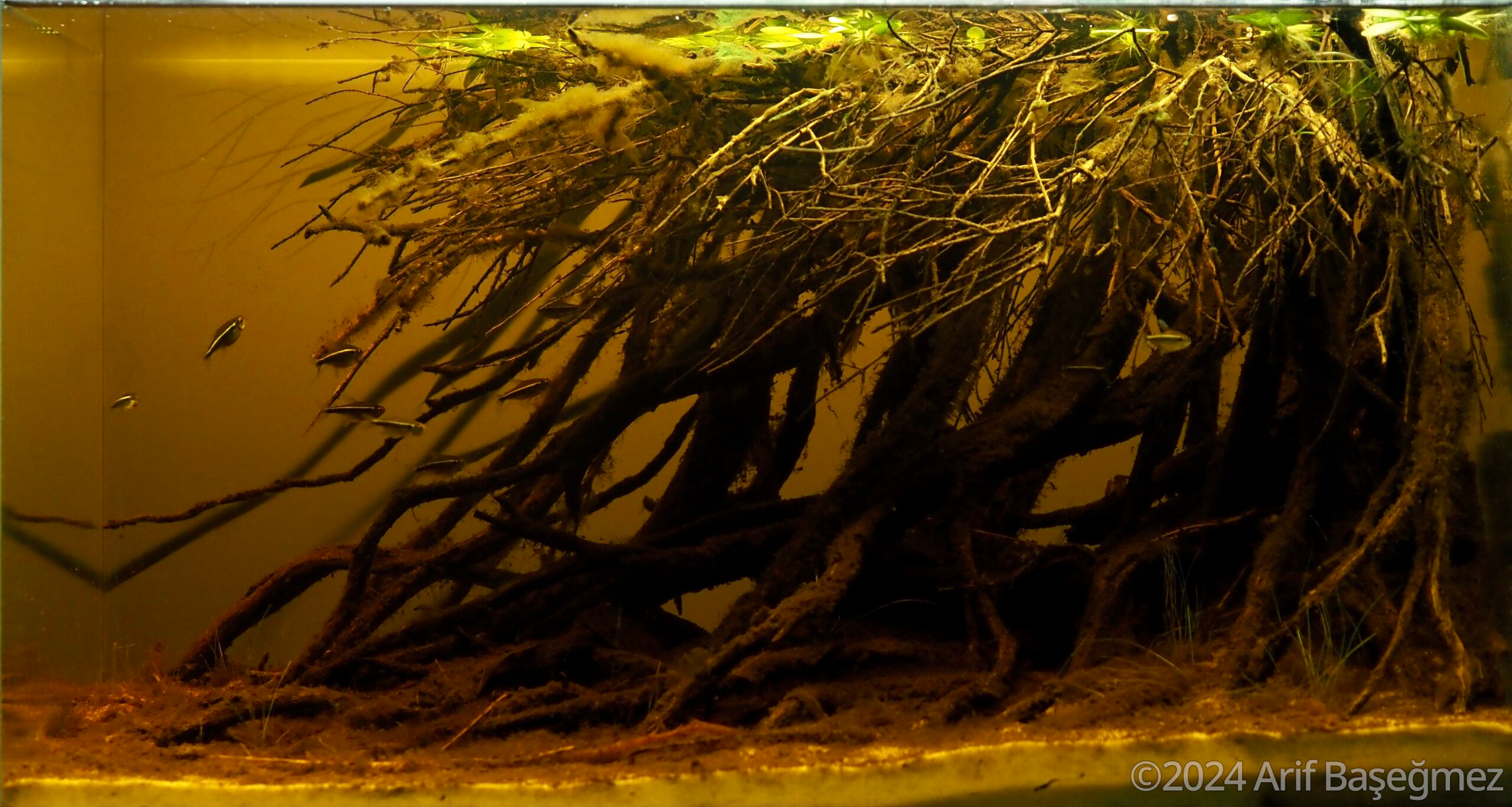

Aquascape Details
Dimensions: 60 cm x 40 cm x 36 cm
Title: Forest Stream, Mato Grosso Do Sul, Coxim, Brasil
Volume: 86.4 L
Lighting: Smd led bar lighting, 6000k 20w
Filtration: Filtering is provided by the Dophin cf-300 500/H system.
Plants: Limnobium laevigatum, eleocharis parvula
Livestock: Hyphessobrycon herbertaxelrodi, Apistogramma trifasciata
Hardscape Materials: Lava stone, dry branches and bushes collected from nature
Background: glass covered with frosted background paper and branch effects created with various light and shadow techniques.
Substrate: 05-01mm quartz sand
Additional Information: The videos shot by Tai Strietman in the state of Mato Grosso have always inspired me. Seeing a video of a habitat, where black neon tetras and my favorite Apistogramma trifasciata live together encouraged me to set-up a biotope. I created a small riparian biotope that flows into the Taquari river west of the town of Coxim. I’m looking at the Apistogramma trifasciata and the black neons Hyphessobrycon herbertaxelrodi together. As I saw in the reference videos, I used fine light sand, dry leaves and bushes, tree roots collected from Nature on the ground. All materials are collected from Nature and are similar to biotope. Tree roots and dry botanicals released into the water from the creek make up the theme. First, the roots in the ground were prepared, and then the horizontal roots were positioned from right to left. By adding dry bushes on these roots, naturalness was increased. Dry leaves and botanicals were added to the ground and sediment was formed.
This biotope aquarium reminds me of riverbanks which have eroded away leaving the roots of many semi-aquatic trees exposed underwater. These trees such as Couepia paraensis, Duroia fusifera, and Hirtella racemosa live right at the riverbanks where its roots can be underwater and may spend months submerged when the water levels rise. Once their roots are exposed, may species of fishes and crustaceans seek shelter between them creating microhabitats of plecos and tetras. The tenants of these microhabitats sometimes get expropriated by bigger cryptic fishes such as large Electric Eels (Electrophorus electricus).
This is one habitat I am 100% certified to judge upon, having explored it many times myself, and the creator has used first hand sources to inform their display. That use of material, has been applied here to create what is a highly authentic and natural representation of the chosen habitat and I am impressed at the level of accuracy which has been attained. The use of the roots not only matches the scenes I have observed in the wild, bur provides excellent cover for the fishes, who appear happy, healthy and confident in the images. The level of detritus is what really makes this display authentic and I appreciate how the creator has resisted the urge to tidy up the display! The restrained use of the plants, especially the Eleocharis, matches what I have seen in this habitat and the substrate is very accurate indeed. The lighting and ‘tannin-stained’ effect has been well done, closely representing the wild aesthetic and I think the use of fake branches as part of the background is a great innovative touch which adds depth to the display. This is my personal favourite entry, not only due to my bias regarding knowledge of the habitat, but to the way in which the creator has produced a faithful recreation of it, using second hand sources, which such effectiveness. The display is a great lesson in the use of detail, observation and application of dedicated effort to create a fantastic biotope.